


Did you know that gluten-free baking can yield cookies just as delicious as their traditional counterparts? With the right blend of flours and the perfect balance of ingredients, you can create a treat that satisfies your cravings without the gluten. Curious about how to whip up these delightful cookies? Stick around to explore the step-by-step process and discover tips that will elevate your baking game.
Recipe Tips and Tricks
- Combine gluten-free flours like almond or oat flour with baking soda and salt for a solid base.
- Cream softened butter with brown and granulated sugar, then mix in an egg and vanilla extract.
- Gradually incorporate the dry mixture into the wet ingredients and fold in optional additions like chocolate chips or nuts.
- Bake at 350°F (175°C) for 10-12 minutes until edges are lightly golden, then cool on a wire rack.
- Store in an airtight container to maintain freshness, and consider freezing for longer shelf life.
How To Make It – Recipe
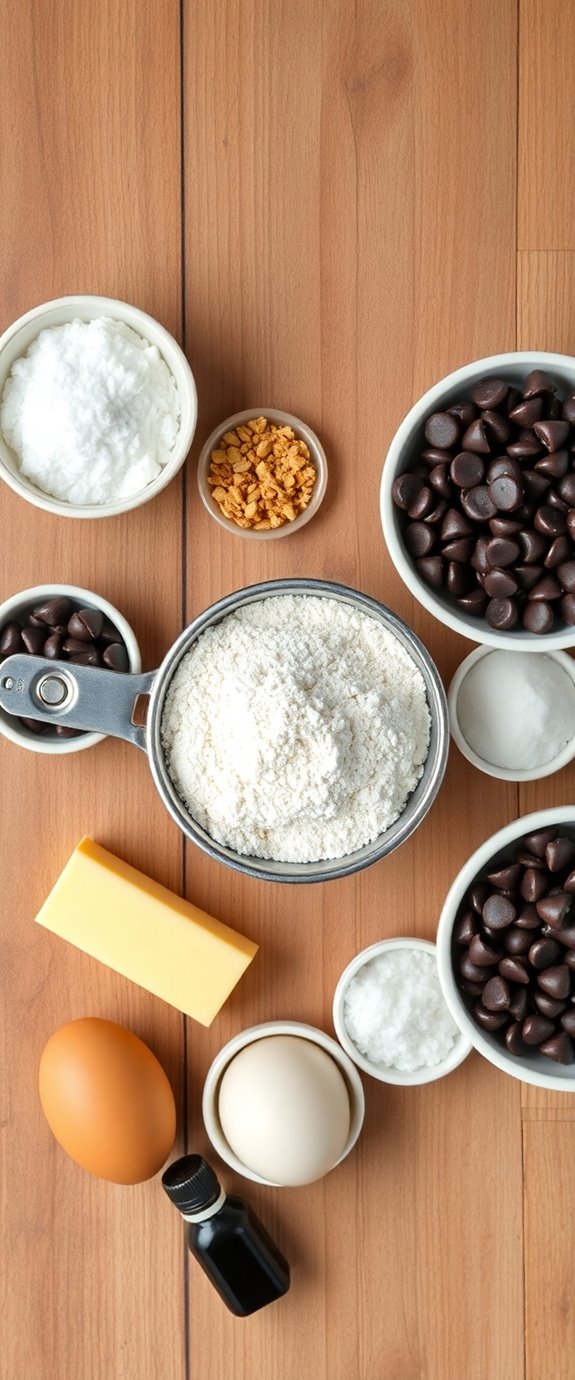
To make gluten-free cookies that are both delicious and satisfying, the first step is to gather all your ingredients. The beauty of gluten-free baking is that you can use a variety of flours, such as almond flour, oat flour, or a gluten-free all-purpose blend. This allows you to tailor the texture and flavor of your cookies to your liking. Additionally, it's important to note that using gluten-free flour can greatly impact the final outcome of your cookies.
Once you have your ingredients ready, preheat your oven to 350°F (175°C) and prepare your baking sheets by lining them with parchment paper.
Next, you'll want to combine your dry ingredients in one bowl and your wet ingredients in another. This helps to guarantee a more even distribution of flavors and textures in your cookies. Once both mixtures are ready, you can combine them and fold in any additional ingredients like chocolate chips or nuts. The dough should be slightly sticky but manageable, allowing you to scoop it onto your baking sheets with ease.
Ingredients:
- 1 cup gluten-free flour (almond flour, oat flour, or gluten-free all-purpose blend)
- 1/2 teaspoon baking soda
- 1/4 teaspoon salt
- 1/2 cup unsalted butter, softened
- 1/2 cup brown sugar
- 1/4 cup granulated sugar
- 1 large egg
- 1 teaspoon vanilla extract
- 1/2 cup chocolate chips (optional)
In a large mixing bowl, cream together the softened butter, brown sugar, and granulated sugar until light and fluffy. Add the egg and vanilla extract, mixing until well combined.
In a separate bowl, whisk together the gluten-free flour, baking soda, and salt. Gradually add the dry ingredients to the wet mixture, stirring until just combined. If desired, fold in chocolate chips or any other mix-ins of your choice.
Using a cookie scoop or tablespoon, drop dough onto the prepared baking sheets, spacing them about 2 inches apart. Bake in the preheated oven for 10-12 minutes, or until the edges are lightly golden. Allow the cookies to cool on the baking sheet for a few minutes before transferring them to a wire rack to cool completely.
When making gluten-free cookies, it's essential to recognize that the texture may vary slightly from traditional cookies. To enhance the flavor, consider adding a pinch of cinnamon or a sprinkle of sea salt on top before baking.
Additionally, if you're using a gluten-free flour blend, make sure it contains xanthan gum or add it separately to improve the cookie's structure. Always allow the cookies to cool completely on a wire rack to maintain their texture and prevent them from becoming too soft.
Substitution Suggestions
When you're ready to experiment with your gluten-free cookie recipe, consider some tasty substitutions that can elevate your baking game.
Instead of traditional flour, try almond flour or coconut flour as gluten alternatives; they add unique flavors and textures. For binding, you can use ground flaxseed or chia seeds mixed with water.
Don't forget to explore sweetener options like maple syrup or coconut sugar, which can enhance the cookie's taste and moisture. Additionally, incorporating gluten-free flour options can greatly improve the overall texture of your cookies.
These swaps not only cater to dietary needs but also open up exciting flavor profiles, making each batch a delightful adventure in your kitchen.
Enjoy the creativity!
Decorating Ideas
Although decorating gluten-free cookies can seem intimidating, it's a chance to showcase your creativity and make your treats visually stunning.
Embrace festive themes by using vibrant color combinations and seasonal motifs like snowflakes or pumpkins. Experiment with icing techniques—pipe intricate designs or create smooth bases for your cookie decoration.
Don't forget to sprinkle on some edible glitter for that extra sparkle! Add creative toppings like crushed nuts or sprinkles, and personalize your cookies with heartfelt messages. Additionally, using gluten-free flour alternatives can enhance both the texture and flavor of your cookies.
With endless possibilities, you can transform simple cookies into memorable delights that will impress your friends and family during any occasion.
Serving Suggestions
Serving gluten-free cookies can elevate any gathering, especially when you consider unique presentation ideas that will wow your guests.
Try stacking your cookies on a decorative platter, garnished with fresh fruit or edible flowers. For a cozy evening, pair your cookies with rich hot chocolate or aromatic herbal teas.
At parties, consider creating a cookie bar with various cookie pairings, like chocolate chip with vanilla ice cream or oatmeal raisin with spiced cider. Including delicious Christmas cookies in your offerings can make the event even more festive.
These serving occasions turn simple treats into unforgettable experiences, making your gluten-free cookies a delightful centerpiece that everyone will enjoy, regardless of dietary preferences.
Make-Ahead and Storage
To make your gluten-free cookie experience even more enjoyable, consider preparing them in advance.
Batch preparation is a game-changer; you can whip up a large batch and freeze cookies for future cravings. Simply scoop the dough onto a baking sheet, freeze until solid, then transfer the cookie dough balls into a freezer-safe bag.
When you're ready to indulge, just bake them straight from the freezer—no thawing needed! This method not only saves time but also guarantees you always have fresh cookies on hand. Plus, quick and easy cookies are perfect for satisfying any last-minute cravings.
Enjoy the convenience of having delicious, gluten-free treats ready whenever you need them!
How to Store Leftovers
Storing leftover gluten-free cookies properly can keep them fresh and delicious for days.
Start by letting your cookies cool completely. Once cooled, place them in an airtight container to maximize cookie freshness. You can layer parchment paper between cookies to prevent sticking.
For longer storage, consider freezing them. Just wrap each cookie in plastic wrap, then place them in a freezer-safe bag. This method guarantees excellent leftover storage while preserving flavor and texture. Dairy-free cookies can also maintain their taste and quality when stored correctly.
When you're ready to enjoy, simply thaw at room temperature or warm them briefly in the oven. Enjoy your delightful treats whenever you crave them!
Nutrition Facts(per serving)
When you indulge in one of these gluten-free cookies, you're not just treating yourself; you're also enjoying a delightful blend of flavors and nutrients.
Each cookie packs a satisfying caloric content of around 150 calories, making it a guilt-free snack. The ingredient breakdown reveals wholesome components like almond flour, coconut sugar, and dark chocolate chips, which provide healthy fats and antioxidants. Additionally, these cookies are crafted to be zero sugar options, allowing you to enjoy sweetness without the added sugars.
With a balance of carbohydrates and protein, these cookies fuel your body while satisfying your sweet tooth.
Final Thoughts
As you take a moment to reflect on your baking experience, it's clear that these gluten-free cookies are more than just a tasty treat; they represent a perfect blend of health and indulgence.
With gluten-free benefits like improved digestion and increased energy, you can savor every bite without guilt.
Plus, the beauty of these cookies lies in their versatility; you can experiment with cookie variations, adding nuts, dried fruits, or even chocolate chips to suit your taste.
Embrace your creativity, and remember that baking gluten-free doesn't mean sacrificing flavor or texture. Incorporating ingredients like zucchini not only enhances moisture but also adds nutritional value to your cookies.
Enjoy your delicious creations, knowing they're a step towards healthier indulgence!
Recipe FAQs
Can I Use Almond Flour Instead of Gluten-Free Flour?
Absolutely, you can use almond flour instead of gluten-free flour! Almond flour offers numerous benefits, like added protein and healthy fats, making it a fantastic gluten-free alternative that enhances flavor and texture in your baked goods.
What Is the Best Way to Soften Butter Quickly?
Imagine butter as a shy friend. To coax it out of its shell, try the microwave method—10 seconds on low power works wonders. Alternatively, just leave it at room temperature for a quick, soft embrace.
How Do I Know When Cookies Are Done Baking?
To know when your cookies are done baking, check their color and texture. They should be golden around the edges but soft in the center. Remember, they'll firm up as they cool! Trust your instincts.
Can I Freeze the Cookie Dough Before Baking?
Freezing cookie dough is like capturing a sweet moment in time. For best results, use airtight containers or plastic wrap for dough storage. Remember to label it with freezing tips for future baking bliss!
What Can I Add for a Chocolate Chip Cookie Variation?
You can enhance your chocolate chip cookies by adding chopped nuts, sea salt, or even a swirl of caramel. These chocolate additions create delightful flavor variations, elevating your cookies from ordinary to extraordinary with every bite.


