Did you know that dairy-free carrot cake can be just as rich and moist as its traditional counterpart? By using simple substitutes like unsweetened applesauce and vegetable oil, you can create a dessert that's both indulgent and suitable for those with dietary restrictions. If you're curious about how to achieve that perfect balance of flavors and textures, stick around for tips and tricks that will elevate your baking game.
Recipe Tips and Tricks
- Use vegetable oil and unsweetened applesauce to keep the carrot cake moist without dairy ingredients.
- Substitute eggs with flaxseed meal mixed with water for a vegan-friendly option.
- Opt for almond or oat milk instead of dairy milk to maintain the cake's texture.
- For frosting, consider cashew cream or creamy coconut frosting as dairy-free alternatives.
- Enhance flavor with spices like nutmeg or cardamom, and consider gluten-free flour for a lighter texture.
How To Make It – Recipe
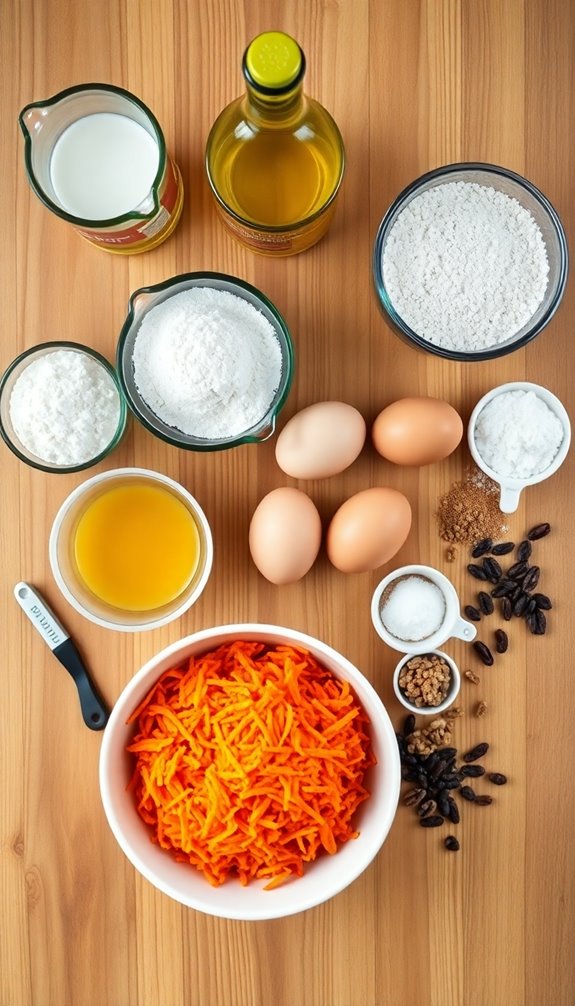
To create a delicious Dairy Free Carrot Cake, you'll want to start by gathering fresh ingredients and ensuring that everything is prepared for a smooth baking experience. Carrot cake is a wonderful dessert that combines the natural sweetness of carrots with warm spices, making it a favorite for many. The absence of dairy doesn't compromise the flavor or moisture of the cake; instead, it allows the carrots and spices to shine through beautifully.
This recipe will guide you through the process of making a moist and flavorful dairy-free carrot cake that can be enjoyed by everyone, regardless of dietary restrictions. Perfect for birthdays, celebrations, or just a sweet treat to enjoy at home, this cake is sure to impress with its rich taste and delightful texture. Deliciously Moist Dairy-Free Carrot Cake is a perfect example of how delicious this dessert can be! Let's get started!
Ingredients:
- 2 cups grated carrots
- 1 ½ cups all-purpose flour
- 1 cup granulated sugar
- 1 cup vegetable oil
- 1/2 cup unsweetened applesauce
- 3 large eggs
- 1 teaspoon vanilla extract
- 1 teaspoon baking soda
- 1 teaspoon baking powder
- 1 teaspoon ground cinnamon
- 1/2 teaspoon ground nutmeg
- 1/4 teaspoon salt
- 1/2 cup chopped walnuts or pecans (optional)
- 1/2 cup raisins (optional)
In a large mixing bowl, combine the grated carrots, flour, sugar, vegetable oil, applesauce, eggs, and vanilla extract. Mix until well blended.
In a separate bowl, whisk together the baking soda, baking powder, cinnamon, nutmeg, and salt. Gradually add the dry ingredients to the wet mixture, stirring until just combined. If desired, fold in the chopped nuts and raisins.
Pour the batter into a greased 9-inch round cake pan and smooth the top. Bake in a preheated oven at 350°F (175°C) for 30-35 minutes or until a toothpick inserted in the center comes out clean. Allow the cake to cool in the pan for 10 minutes before transferring it to a wire rack to cool completely.
For best results, make sure your ingredients are at room temperature before mixing. You can also experiment with adding spices like ginger or cardamom for an extra flavor boost.
If you like a sweeter cake, feel free to increase the sugar or add a dairy-free frosting on top to enhance the overall taste. Enjoy your baking and the delicious aroma that fills your kitchen!
Substitution Suggestions
If you're looking to customize your dairy-free carrot cake, there are plenty of substitution options that can enhance both flavor and texture.
Instead of traditional butter, try using coconut oil or vegan butter for a rich, moist cake. For eggs, flaxseed meal mixed with water serves as a fantastic binding agent.
When it comes to milk, almond or oat milk can provide the creaminess you crave. Don't forget to experiment with dairy alternatives like cashew cream for a luscious frosting.
Adding spices like nutmeg or cardamom can also serve as delightful flavor enhancements, making your cake truly unforgettable! Additionally, incorporating keto-friendly sweeteners can help keep your cake low in carbohydrates while still satisfying your sweet tooth.
Decorating Ideas
How can you make your dairy-free carrot cake not just delicious, but visually stunning as well? Start with frosting options like creamy coconut or silky cashew frosting for a mouthwatering finish.
Spread it generously, then use a spatula to create swirls for texture. For garnish ideas, sprinkle chopped walnuts or pecans on top for a delightful crunch.
Add a touch of color with edible flowers or citrus zest. You could even place thinly sliced carrots or raisins around the base, enhancing the cake's appearance while echoing its flavors. Additionally, consider using gluten-free flour to ensure the cake remains light and fluffy.
These small touches turn your cake into a feast for both the eyes and the palate!
Serving Suggestions
While enjoying a slice of your dairy-free carrot cake, consider pairing it with a few simple yet delightful accompaniments that elevate the experience.
Try dolloping a generous serving of coconut cream or a tangy vegan cream cheese frosting for a luscious touch. If you prefer a lighter option, a dusting of powdered sugar or a drizzle of maple syrup works wonders.
Keep in mind serving sizes—cutting smaller pieces lets everyone indulge guilt-free. Fresh fruit, like sliced strawberries or mango, can also brighten the plate, adding a revitalizing contrast to the warm spices in the cake. Additionally, serving these alongside funnel cake bites can create a fun and festive dessert experience.
Enjoy experimenting with these delicious combinations!
Make-Ahead and Storage
To guarantee your dairy-free carrot cake remains fresh and delicious, preparing it ahead of time can be a game-changer.
The make-ahead benefits are impressive—you can enjoy the flavors developing as it sits. Bake your cake a day or two in advance, then cool completely before wrapping it tightly.
Use quality storage containers to keep it moist and prevent any odors from affecting its taste. If you want to frost it later, store the layers separately. Additionally, moist carrot cake requires proper storage to maintain its texture and flavor.
This simple strategy not only saves time but also enhances the overall flavor, making your dessert even more delightful when it's time to serve.
How to Store Leftovers
When you've savored every last bite of your dairy-free carrot cake, storing the leftovers properly guarantees they stay just as delectable for days to come.
For best leftover storage, choose the best containers—airtight ones are ideal. Slice the cake and wrap each piece in plastic wrap, then place them in your chosen container. This method helps maintain moisture and flavor. It's also worth noting that using Greek yogurt as an ingredient can enhance the cake's texture and richness, making it even more delightful.
If you plan to keep it longer, consider freezing individual slices. Just remember to label your containers with the date so you can enjoy your delicious treat at its best whenever you crave it!
Nutrition Facts(per serving)
Understanding the nutrition facts of your dairy-free carrot cake can enhance your enjoyment of this delicious treat. Each serving typically contains around 250 calories, making it a satisfying dessert without overindulging.
The ingredient breakdown reveals wholesome components like almond flour, carrots, and natural sweeteners, offering essential vitamins and minerals. You'll find healthy fats from the oil and nuts, providing energy and promoting satiety.
Plus, the spices not only add flavor but also boast antioxidant properties. By knowing the caloric content and benefits of each ingredient, you can savor your slice of cake while feeling good about your choices. Additionally, using almond flour contributes to the cake's gluten-free nature, making it suitable for various dietary preferences.
Final Thoughts
As you take that first bite of your dairy-free carrot cake, you'll likely appreciate how the blend of spices and natural sweetness creates a delightful harmony of flavors.
This cake isn't just delicious; it's also versatile, making it suitable for various occasions, from birthday celebrations to cozy gatherings.
Whether you're catering to vegan friends or simply exploring new taste preferences, this recipe shines.
Each slice offers moistness and flavor without the heaviness of traditional cakes.
You'll find yourself returning to this recipe time and again, delighting in its health-conscious yet indulgent nature.
The deliciously spiced gingerbread cake is another fantastic option for those who enjoy rich, flavorful desserts.
Enjoy every crumb and share the joy!
Recipe FAQs
Can I Use Gluten-Free Flour in This Recipe?
Imagine a fluffy cake rising, golden and inviting. You can absolutely use gluten-free flour in this recipe; just make certain it's a good blend for best flour texture. Explore those gluten-free options to create something delicious!
What Spices Can I Add for Extra Flavor?
You can elevate your dish's flavor by adding spices like nutmeg, ginger, or allspice. For cinnamon alternatives, consider cardamom or cloves; they'll enhance the overall taste and create a delightful aromatic experience in your recipe.
How Can I Make This Cake Nut-Free?
To make your cake nut-free, think of it as a dance—swap nuts for seeds like sunflower or pumpkin. Use allergy substitutions like applesauce instead of nut butter, ensuring every bite remains delicious and safe!
Is There a Vegan Option Available for This Recipe?
You can easily make a vegan version by using plant-based ingredients. Substitute eggs with flaxseed meal or applesauce, and swap dairy milk for almond or oat milk. It'll be deliciously moist and satisfying!
Can I Add Raisins or Pineapple to the Cake?
Adding raisins or pineapple can enhance your cake's texture and add a sweet flavor that balances the spices beautifully. You'll love the delightful surprise they bring with each bite. Go ahead and experiment!