


The Easter cake stands as a symbol of renewal and celebration, much like the vibrant blooms of spring. It embodies joy and togetherness, inviting you to gather with loved ones. Imagine layering a classic vanilla cake with creamy frosting, then adding your unique touch. What flavors and decorations will you choose to make it memorable? The possibilities are endless, and the journey to create this centerpiece is just beginning.
Recipe Tips and Tricks
- Use 2 ½ cups flour, 2 cups sugar, 4 eggs, and other ingredients to create the classic vanilla cake base.
- Add lemon or almond flavoring for a personalized twist on your Easter cake.
- Decorate with cream cheese frosting, chocolate eggs, edible flowers, or pastel sprinkles for a festive look.
- Consider make-ahead options like preparing dry ingredients in advance or freezing the cake after cooling.
- Explore alternative recipes like carrot, lemon, or gluten-free chocolate cake to cater to different dietary preferences.
How To Make It – Recipe
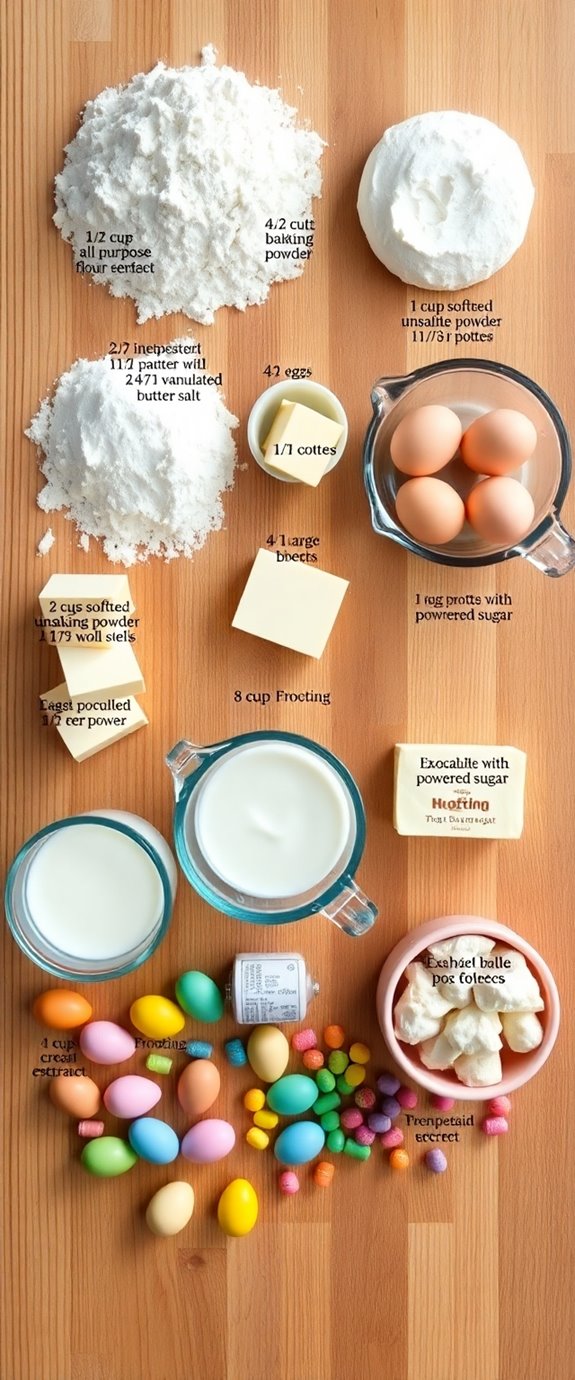
Easter is a time for celebration, joy, and, of course, delicious treats! One of the most cherished traditions during this festive season is the baking of an Easter cake. This cake can be a centerpiece for your holiday table, adorned with vibrant colors and delightful flavors that evoke the spirit of spring. This recipe will guide you through the process of making a delightful Easter cake that's both visually stunning and scrumptiously tasty, certain to impress your family and friends.
In this recipe, we'll create a classic vanilla cake layered with a luscious cream cheese frosting, all topped off with colorful decorations. The cake can be customized with your favorite flavors, such as lemon or almond, and can be decorated with chocolate eggs, edible flowers, or pastel sprinkles. It's a fun and engaging baking project that allows you to be creative while creating a delicious dessert that everyone will love.
Ingredients:
- 2 ½ cups all-purpose flour
- 2 ½ teaspoons baking powder
- ½ teaspoon salt
- 1 cup unsalted butter, softened
- 2 cups granulated sugar
- 4 large eggs
- 1 tablespoon vanilla extract
- 1 cup whole milk
- 8 oz cream cheese, softened
- 4 cups powdered sugar
- 1 teaspoon vanilla extract (for frosting)
- Food coloring (optional)
- Edible decorations (e.g., chocolate eggs, sprinkles)
To make the Easter cake, preheat your oven to 350°F (175°C) and grease and flour two 9-inch round cake pans. In a bowl, combine the flour, baking powder, and salt. In a large mixing bowl, cream the softened butter and granulated sugar until light and fluffy.
Add the eggs one at a time, mixing well after each addition, and then stir in the vanilla extract. Gradually add the dry ingredients to the butter mixture, alternating with the milk, until combined. Pour the batter evenly into the prepared pans and bake for 25-30 minutes, or until a toothpick inserted into the center comes out clean.
Once baked, allow the cakes to cool in the pans for 10 minutes before transferring them to a wire rack to cool completely.
When it comes to decorating your Easter cake, let your creativity shine! You can tint the cream cheese frosting with food coloring to match the theme of your celebration. Once the cakes are completely cooled, spread a layer of frosting between the two cakes, then cover the entire cake with the remaining frosting.
Finish off with your choice of edible decorations, such as chocolate eggs, flowers, or sprinkles for a festive look. A deliciously simple chocolate cake can also be made alongside this Easter cake to offer guests an additional treat.
Extra Tips:
When baking your Easter cake, make sure that all your ingredients are at room temperature for better mixing and a smoother batter. If you want to add a unique twist, consider incorporating fresh fruit, like raspberries or lemon zest, into the frosting for added flavor.
Additionally, for a more moist cake, you can brush the layers with a simple syrup made from equal parts water and sugar before frosting. Enjoy the process and have fun decorating your cake!
Substitution Suggestions
When baking your Easter cake, it's helpful to know that you can easily swap out some ingredients based on what you have on hand or your dietary preferences.
For those needing flour alternatives, consider using almond flour, coconut flour, or even gluten-free blends to achieve a delightful texture.
If you're looking for egg replacements, applesauce, mashed bananas, or flaxseed meal mixed with water work wonders.
These substitutions not only cater to various diets but also add unique flavors to your cake. Quick Gluten Free Cake Recipe can inspire your baking process by providing easy-to-follow steps for a delicious dessert.
Embrace the versatility of your ingredients, and you'll create a delicious dessert that suits everyone's taste!
Decorating Ideas
There's something magical about transforming your cake into a stunning centerpiece for your celebration.
Explore various decorative techniques to bring your Easter cake to life. Choose from smooth buttercream or vibrant fondant icing options to create a flawless finish.
Consider using pastel color themes for that festive touch, or go bold with bright hues for a modern twist. Edible embellishments like sugar flowers, chocolate eggs, or colorful sprinkles can add delightful details.
Don't forget to play with textures and patterns; a simple spatula can create beautiful swirls. Additionally, incorporating blueberry cake into your design can enhance both flavor and visual appeal.
Let your creativity shine and make your cake the highlight of the festivities!
Serving Suggestions
After you've crafted a beautiful Easter cake, it's time to think about how to serve it. For a delightful Easter brunch, consider slicing the cake into generous pieces and arranging them on a vibrant platter.
Add colorful fruit, like strawberries and kiwi, around the cake for a fresh touch. You can also dust the cake with powdered sugar for a light, festive presentation.
To elevate the experience, serve each slice with a dollop of whipped cream or a scoop of vanilla ice cream. Your guests will appreciate the thoughtful details, making your Easter celebration truly memorable and delicious! Additionally, consider pairing the cake with a deliciously easy birthday cake recipe to impress everyone at your gathering.
Make-Ahead and Storage
To guarantee your Easter cake is as fresh as possible, planning ahead can be a game changer.
Start with ingredient prep a day or two in advance; measure out dry ingredients and store them in airtight containers. When it's time to bake, you'll save precious moments.
If you're short on time, consider cake freezing. Bake your cake a few days prior, let it cool completely, then wrap it tightly in plastic wrap and foil before placing it in the freezer. This preserves flavor and moisture, ensuring your cake tastes delightful when you're ready to serve it.
Additionally, using an eggless cake recipe can simplify the process and allow for broader dietary options.
Enjoy stress-free baking!
How to Store Leftovers
Once you've enjoyed your delicious Easter cake, storing any leftovers properly guarantees you can savor those sweet bites for days to come.
For ideal leftover storage, wrap individual pieces in plastic wrap or aluminum foil to lock in moisture. You can also place slices in an airtight container to enhance cake preservation. Additionally, keeping your cake in a cool, dry place can help maintain its gluten free texture and flavor.
If you want to keep it longer, consider freezing portions. Just remember to thaw it in the fridge before indulging again.
Nutrition Facts(per serving)
When you indulge in a slice of Easter cake, it's not just about the delightful flavors; it's also important to take into account the nutrition facts per serving. Each slice typically contains around 300 calories, thanks to the rich ingredients like butter, sugar, and eggs.
The ingredient breakdown reveals a balance of carbohydrates, fats, and proteins, making it a satisfying treat. You'll also find essential vitamins and minerals from the eggs and any fruit you may add. Additionally, for those with dietary restrictions, a gluten-free chocolate cake can be a delicious alternative that doesn't compromise on taste.
Final Thoughts
As you savor each bite of your Easter cake, it's essential to reflect on the joy it brings to your celebrations. This delightful dessert not only satisfies your sweet tooth but also enhances your Easter traditions, creating lasting memories with loved ones.
Whether you choose a classic carrot cake or experiment with unique cake variations like lemon or coconut, each recipe adds its own flair to the festivities. Delicious Apple Cake is another wonderful option that can bring a fresh twist to your Easter dessert table.
As you gather around the table, sharing stories and laughter, remember that the true essence of Easter lies in togetherness. So, enjoy every forkful and cherish these moments that make life sweeter.
Recipe FAQs
Can I Use Gluten-Free Flour for This Easter Cake?
Absolutely, you can use gluten-free flour! Just make certain you include suitable gluten-free alternatives like almond or coconut flour. If needed, consider baking powder substitutions for the best texture and flavor in your cake. Enjoy baking!
How Long Does It Take to Bake the Cake?
When you're baking the cake, aim for about 25 to 30 minutes. This guarantees a moist cake texture while delivering a delightful rise. Keep an eye on it; every oven's baking time can vary slightly.
What Is the Best Way to Cool the Cake?
To cool your cake effectively, place it on a cooling rack. This allows air to circulate, preventing sogginess. Once cooled, store it in an airtight container to maintain freshness and flavor. Enjoy your delicious creation!
Can I Freeze the Cake After Baking?
Yes, you can freeze the cake after baking! For best results, wrap it tightly in plastic wrap and use aluminum foil. These freezing tips guarantee freshness and flavor, making storage methods simple for future enjoyment.
What Type of Frosting Works Best for This Cake?
Imagine biting into a rich cake topped with creamy frosting. For a delightful pairing, you can't go wrong with cream cheese frosting, which complements the cake's flavors beautifully, or classic buttercream for a sweeter touch.


