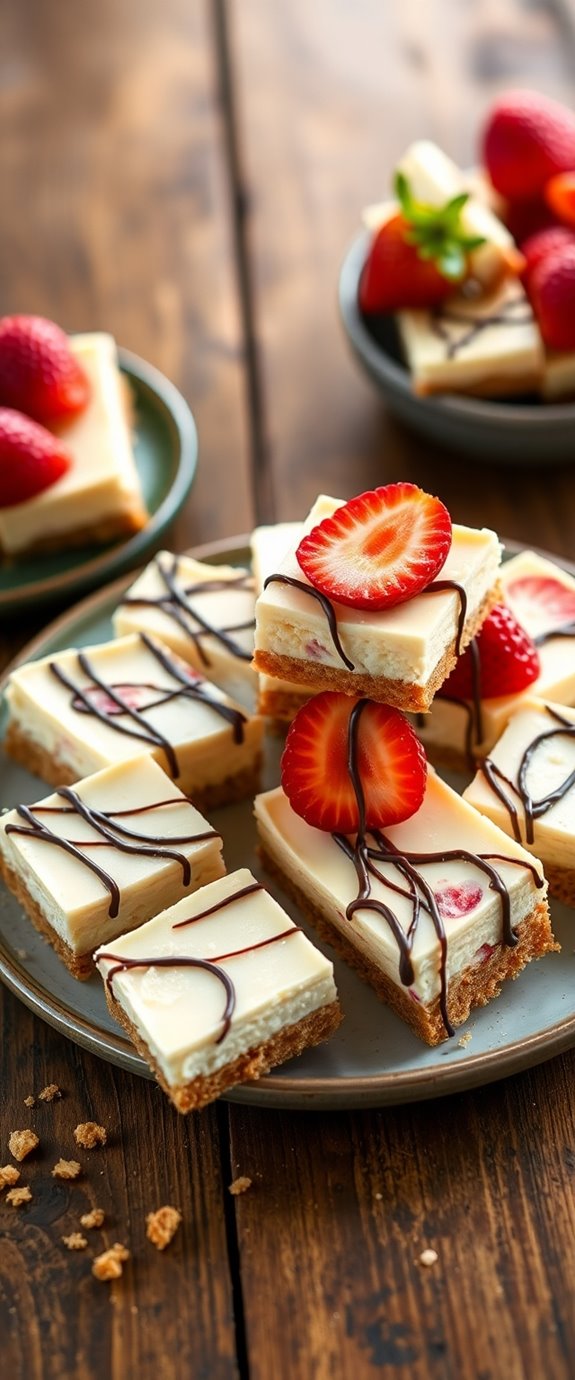
If you're looking to elevate your cheesecake game, consider incorporating sweetened condensed milk into your recipe. This simple addition transforms the classic treat into a rich, creamy delight that's hard to resist. The luscious sweetness from the condensed milk beautifully balances the tangy cream cheese, creating a dessert that's both comforting and indulgent. But there's more to this recipe than just the filling; the crust and presentation can truly make it shine. Let's explore how to create this masterpiece.
Recipe Tips and Tricks
- Replace sugar with sweetened condensed milk in the cheesecake filling for added creaminess and sweetness.
- Combine condensed milk with softened cream cheese for a smooth batter and rich texture.
- Adjust baking time; condensed milk may require slightly longer to set than traditional recipes.
- Use a water bath during baking to prevent cracks in the cheesecake.
- Chill the cheesecake overnight for the best flavor and texture before serving.
How To Make It – Recipe

To make a delicious cheesecake, you'll want to start by gathering all the necessary ingredients and preparing your workspace. Cheesecake is a rich and creamy dessert that has become a favorite for many. Its smooth texture and sweet flavor make it perfect for special occasions or simply as a treat for yourself. The decadent Philadelphia cheesecake is a classic example that showcases the rich flavors of this beloved dessert.
Whether you prefer a classic New York-style cheesecake or want to experiment with different flavors, this recipe will guide you through the significant steps to achieve cheesecake perfection.
Before you begin, it's important to guarantee that your ingredients are at room temperature, which will help achieve a smooth batter. You'll also need a springform pan, as it allows for easy removal of the cheesecake once it's set. This recipe will cover a classic cheesecake, but feel free to add your favorite toppings or flavorings, such as fruit, chocolate, or caramel, to customize it to your liking.
Ingredients:
- 1 ½ cups graham cracker crumbs
- ½ cup unsalted butter, melted
- 1 tablespoon sugar
- 4 (8-ounce) packages cream cheese, softened
- 1 cup sugar
- 1 teaspoon vanilla extract
- 4 large eggs
- 1 cup sour cream
- ¼ cup all-purpose flour
To make the cheesecake, preheat your oven to 325°F (160°C). In a mixing bowl, combine the graham cracker crumbs, melted butter, and 1 tablespoon of sugar to form the crust mixture. Press this mixture firmly into the bottom of a greased 9-inch springform pan.
In a separate large bowl, beat the softened cream cheese until smooth, then gradually add 1 cup of sugar and vanilla extract, mixing until well combined. Add the eggs one at a time, mixing on low speed to avoid incorporating too much air. Finally, mix in the sour cream and flour until smooth.
Pour the cream cheese mixture over the crust in the springform pan and smooth the top with a spatula. Bake for 55-60 minutes or until the center is set but still slightly jiggly. Turn off the oven and let the cheesecake cool in the oven with the door ajar for about an hour. Afterward, refrigerate for at least 4 hours or overnight before serving.
When making cheesecake, it's vital to avoid overmixing the batter to prevent cracks on the surface. If you desire a flavored cheesecake, consider adding ingredients like lemon zest or chocolate chips to the batter. Additionally, for a smoother texture, you can run the cream cheese through a sieve before mixing.
Remember to let the cheesecake cool completely before removing it from the springform pan, and consider decorating the top with fresh fruit, whipped cream, or a drizzle of chocolate sauce for an appealing presentation. Enjoy your homemade cheesecake!
Substitution Suggestions
If you find yourself missing some ingredients for your cheesecake, don't worry—there are plenty of substitutions that can still deliver a delicious result.
For cream cheese, you can use mascarpone or Greek yogurt for a creamy texture. If you need a crust alternative, crushed graham crackers work well, but so do crushed cookies or even oats.
When it comes to sugar, consider alternative sweeteners like honey or maple syrup for a unique flavor. For a richer taste, you might try adding sour cream or ricotta. Additionally, using Deliciously Creamy Greek Yogurt in your cheesecake can enhance its flavor and texture.
These substitution ideas guarantee your cheesecake remains delightful, no matter what's in your pantry!
Decorating Ideas
Once you've perfected your cheesecake, it's time to elevate it with some eye-catching decorations.
Start by topping your cheesecake with a generous swirl of whipped cream, adding a light and fluffy contrast to the creamy texture. For a decadent touch, drizzle warm chocolate over the whipped cream, allowing it to cascade down the sides.
You can also sprinkle some crushed graham crackers or fresh berries for added color and texture. If you're feeling adventurous, try adding a dusting of cocoa powder or a few mint leaves for a revitalizing finish. Additionally, consider incorporating decadent strawberry cheesecake into your decorations for a fruity twist.
Your beautifully decorated cheesecake will be a showstopper!
Serving Suggestions
Serving cheesecake is an art in itself, transforming a delicious dessert into a memorable experience. Start by cutting your cheesecake into generous serving sizes, ensuring each slice showcases that creamy texture.
As for cheesecake toppings, the options are endless! Drizzle with rich chocolate sauce, fresh fruit, or a dollop of whipped cream for a delightful contrast. For a bit of crunch, sprinkle crushed graham crackers or nuts on top.
Consider pairing your cheesecake with a side of coffee or dessert wine to enhance the flavors. A deliciously creamy cheesecake, made with condensed milk, adds an extra layer of richness that will delight your guests. With these suggestions, each guest will savor every bite, making your cheesecake the star of the gathering!
Make-Ahead and Storage
When you're planning a gathering, making your cheesecake ahead of time can save you stress and guarantee it's perfectly set.
Use these make-ahead tips: prepare your cheesecake a day or two in advance, allowing flavors to meld and the texture to firm up beautifully. A well-made cheesecake can remain delicious for days, so you can enjoy it even after the event.
Once cooled, place it in airtight storage containers to preserve freshness. If you're using a springform pan, simply cover it tightly with plastic wrap.
This way, you can focus on your guests while your delicious cheesecake awaits.
How to Store Leftovers
To guarantee your leftover cheesecake stays fresh and delicious, it's essential to store it properly right after your gathering.
First, let the cheesecake cool completely before covering it. Use an airtight container or wrap it tightly in plastic wrap to prevent air exposure.
For ideal leftover storage, place it in the refrigerator, where it can last up to a handful of days. If you want to keep it longer, consider freezing individual slices—just wrap them in foil and store them in a freezer-safe bag. No bake gluten free cheesecake is a great option for those looking for a simple dessert.
When you're ready to enjoy, simply thaw it in the refrigerator overnight for a delightful treat!
Nutrition Facts(per serving)
Indulging in a sugar-free cheesecake can be a guilt-free treat as it often contains lower calorie ingredients that help maintain a healthier lifestyle.
Final Thoughts
After savoring the delightful taste and rich texture of your homemade cheesecake, it's clear that this dessert isn't just a treat; it's an experience.
Perfect for celebration desserts, your cheesecake can elevate any gathering with its creamy goodness.
Plus, don't hesitate to explore cheesecake variations—think fruity toppings, chocolate swirls, or even a hint of spices. Each variation offers its own twist, making every bite unique.
Remember, the joy of baking comes from experimenting and sharing with loved ones. Additionally, mastering a homemade cheesecake can open the door to creating even more delightful desserts in the future.
Recipe FAQs
Can I Use Low-Fat Condensed Milk for This Recipe?
You can definitely use low-fat condensed milk for this recipe! It's a great choice among low-fat alternatives. Just keep in mind that it might slightly alter the creaminess compared to regular milk substitutes. Enjoy experimenting!
How Long Does the Cheesecake Take to Set?
You'll want to be patient while your cheesecake embraces its cooling period. Typically, the setting time takes about four to six hours. Letting it chill overnight guarantees a perfectly firm and delightful dessert awaits you!
Can I Make This Cheesecake Gluten-Free?
Absolutely, you can make this cheesecake gluten-free! Consider using gluten-free options like almond flour or crushed gluten-free cookies for crust alternatives. These substitutions will guarantee your cheesecake remains delicious and satisfying for everyone. Enjoy your baking!
What Is the Best Type of Crust for Cheesecake?
For the best cheesecake crust, you can't go wrong with a crushed graham cracker base for a classic flavor or an Oreo cookie crust for a rich, chocolatey twist. Both options elevate your dessert beautifully!
Can I Freeze Cheesecake Made With Condensed Milk?
Yes, you can freeze cheesecake! For ideal storage, wrap it tightly in plastic and foil. When ready to enjoy, thaw it overnight in the fridge for the best texture and flavor. Happy indulging!