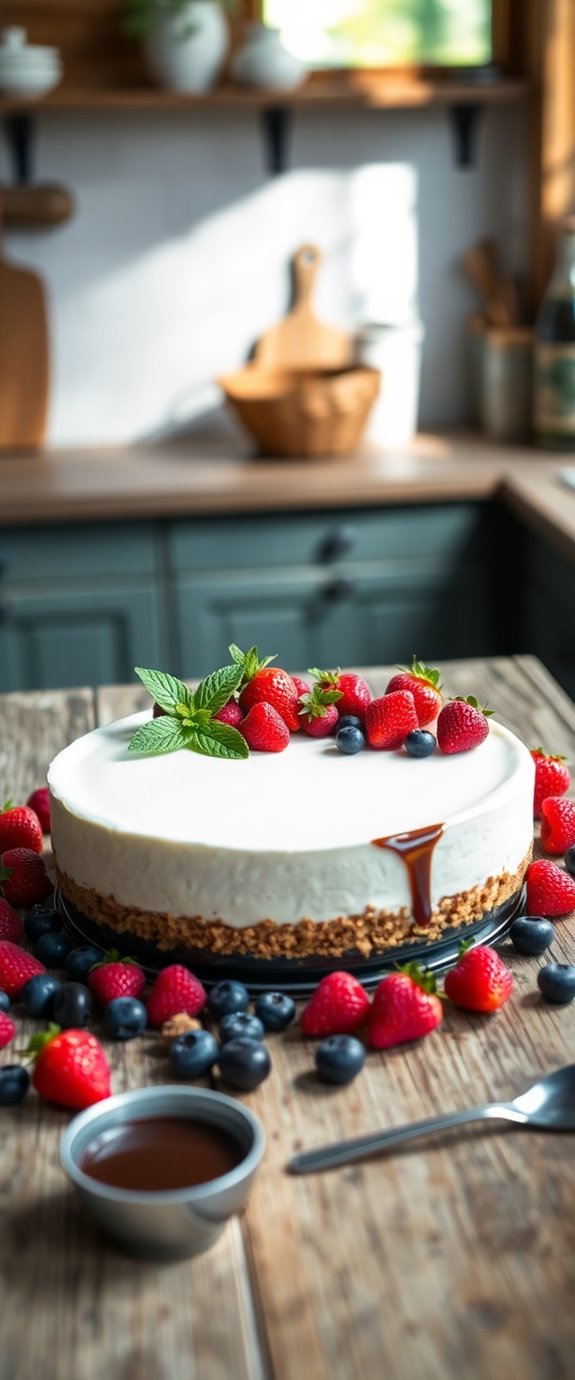
You might think a cheesecake can't be delicious without dairy or nuts, but this dairy and nut-free version proves otherwise. With creamy coconut cream and a gluten-free cookie crust, you can indulge guilt-free. Imagine the rich texture and vibrant flavors that come from simple, wholesome ingredients. Curious about how to whip up this delightful treat and make it your own? Let's explore the recipe and more.
Recipe Tips and Tricks
- This cheesecake uses coconut cream for a rich, creamy texture while being completely dairy and nut-free.
- A gluten-free cookie crust provides a crunchy base, suitable for those with gluten sensitivities.
- The recipe is simple and allows for no-bake options, making it accessible to all skill levels.
- Sweetened with maple syrup and enhanced with vanilla, it offers a delicious flavor profile without allergens.
- Serve with fresh berries or coconut whipped cream for a delightful and visually appealing dessert.
How To Make It – Recipe

To create a delicious dairy and nut-free cheesecake, you'll need to focus on using alternative ingredients that provide a creamy texture without the common allergens. This cheesecake uses coconut cream as a base, which adds richness and a hint of tropical flavor. Additionally, a blend of plant-based sweeteners and natural flavorings will guarantee that your dessert is both tasty and suitable for those with dietary restrictions. A baked vegan cheesecake is a fantastic option for those looking to enjoy a creamy dessert without dairy or nuts.
Whether you're preparing it for a gathering or just as a treat for yourself, this recipe is sure to impress.
The crust of the cheesecake is made from gluten-free cookies, offering a crunchy and flavorful base that complements the smooth filling. By using ingredients like coconut oil and oats, you can achieve a satisfying texture without compromising on taste. Follow this simple recipe, and you'll find that making a dairy and nut-free cheesecake can be both easy and enjoyable.
Ingredients:
- 1 ½ cups gluten-free cookies (such as graham crackers or digestive biscuits)
- ½ cup coconut oil, melted
- 2 cans (13.5 oz each) full-fat coconut milk, chilled overnight
- ½ cup maple syrup
- 2 teaspoons vanilla extract
- ¼ cup cornstarch
- 1 tablespoon lemon juice
- Pinch of salt
Instructions:
Begin by preheating your oven to 350°F (175°C).
For the crust, crush the gluten-free cookies into fine crumbs and mix them with the melted coconut oil until fully combined. Press this mixture into the bottom of a springform pan to create an even layer. Bake the crust for about 10 minutes, then let it cool.
Meanwhile, scoop out the solidified coconut cream from the chilled coconut milk and place it in a mixing bowl. Add the maple syrup, vanilla extract, cornstarch, lemon juice, and salt. Using a hand mixer, blend everything until smooth and creamy.
Pour the filling over the cooled crust and bake for an additional 30 minutes. Allow the cheesecake to cool at room temperature, then refrigerate for at least 4 hours or overnight before serving.
Extra Tips:
For the best results, make certain that the coconut milk is chilled overnight, as this helps separate the cream from the liquid.
You can also experiment with different flavors by adding cocoa powder for a chocolate version or incorporating fresh fruit purees for added sweetness. If you prefer a no-bake option, you can skip the baking step altogether and simply refrigerate the cheesecake until set.
Enjoy your delicious dairy and nut-free cheesecake!
Substitution Suggestions
While the original recipe for your dairy and nut-free cheesecake is delightful as it stands, there are plenty of substitution options to cater to your personal taste or dietary needs.
For a creamy texture, try coconut cream or cashew cream instead of traditional dairy. You can also use almond milk to adjust the consistency, making it lighter.
If you prefer a protein boost, incorporate tofu options for a rich, velvety base.
For sweetness and natural flavor, fruit purees like banana or berry can enhance your cheesecake.
Finally, vegan cheese can add an extra layer of creaminess without the dairy. Additionally, consider using dairy-free chocolate for a rich flavor that complements the cheesecake beautifully. Enjoy experimenting!
Decorating Ideas
When it comes to decorating your dairy and nut-free cheesecake, let your creativity shine through! Start with luscious cheesecake toppings like fresh berries, a drizzle of fruit puree, or a sprinkle of coconut flakes for texture.
Use vibrant colors to enhance visual appeal. Experiment with presentation techniques; try layering toppings for depth or using a piping bag to create elegant swirls of dairy-free whipped cream.
Edible flowers can add a touch of sophistication, while chocolate shavings or crushed graham crackers provide a delightful contrast. Consider adding pumpkin cheesecake for a seasonal twist that elevates the flavor profile of your dessert.
Serving Suggestions
Serving your dairy and nut-free cheesecake can elevate any occasion, making it even more memorable.
Consider offering a variety of cheesecake toppings, like fresh berries, a drizzle of fruit compote, or a sprinkle of coconut flakes. These enhance flavors and add visual appeal.
For perfect serving sizes, slice the cheesecake into eighths or sixteenths, depending on your guests' appetites. Pair each slice with a dollop of coconut whipped cream for extra indulgence.
Don't forget to present it on a beautiful platter, garnished with mint leaves, to impress your guests and create a delightful centerpiece at your gathering. Additionally, serving creamy dairy-free cheesecake bars can provide a delightful alternative for guests with dietary restrictions.
Enjoy every bite!
Make-Ahead and Storage
If you want to enjoy your dairy and nut-free cheesecake without the last-minute rush, making it ahead of time is the perfect solution.
You can prepare the cheesecake a day or two in advance, allowing the flavors to meld beautifully.
For longer storage, consider freezing methods—slice the cheesecake into portions and wrap each piece tightly in plastic wrap before placing them in an airtight container.
This way, you'll have delicious servings ready when cravings hit, ensuring portion control is easy.
Just thaw the desired slices in the fridge overnight, and you'll have a delightful dessert waiting for you! Additionally, this cheesecake can be made using alternative ingredients that maintain its creamy texture without dairy or nuts.
How to Store Leftovers
To guarantee your leftover dairy and nut-free cheesecake stays fresh and delicious, proper storage is key.
First, slice your cheesecake into individual portions for easy access. Place each slice in an airtight container or wrap it tightly with plastic wrap. This prevents air exposure, which can affect flavor and texture.
Store it in the refrigerator for up to 5 days to maintain cheesecake longevity. If you want to keep it longer, consider freezing your slices. Just make sure to use freezer-safe containers, and your cheesecake will be ready to enjoy whenever you crave a creamy treat! Additionally, healthy cheesecake recipes can inspire you to create different flavors and variations.
Nutrition Facts(per serving)
Indulging in a slice of dairy and nut-free cheesecake not only satisfies your sweet tooth but also provides a delightful balance of nutrients.
Each serving typically contains around 200-250 calories, making it a guilt-free treat. The ingredient breakdown reveals a blend of creamy coconut yogurt, natural sweeteners, and a gluten-free crust, ensuring you enjoy every bite without compromising on health.
Rich in healthy fats and lower in added sugars, this cheesecake offers a satisfying alternative for those with dietary restrictions. Additionally, the use of creamy coconut yogurt enhances the texture and flavor while keeping it dairy-free.
You'll love how this dessert nourishes both your body and soul while still being incredibly delicious!
Final Thoughts
Enjoying a dairy and nut-free cheesecake isn't just about satisfying your cravings; it's also an opportunity to embrace a healthier dessert option that aligns with your dietary needs.
You'll discover numerous health benefits, such as lower cholesterol and reduced allergens.
Plus, the taste comparison with traditional cheesecakes might surprise you—many find the creamy texture and rich flavors equally delightful.
With the right ingredients, you can indulge guilt-free, knowing you're making a conscious choice. Additionally, using plant-based alternatives can enhance the flavor profile while ensuring your dessert remains dairy-free.
Recipe FAQs
Can I Use Tofu for a Creamier Texture?
Absolutely, you can use tofu for a creamier texture! Tofu textures can mimic traditional creaminess, offering creamy alternatives that blend smoothly. Just blend it well, and you'll achieve that luscious, creamy consistency you're after.
What Is the Best Dairy-Free Alternative for Cream Cheese?
For the best dairy-free alternative to cream cheese, try cashew cream for its rich, creamy texture, or almond yogurt for a lighter option. Both add delightful flavors and enhance your recipes beautifully. Enjoy experimenting!
How Do I Achieve a Firmer Cheesecake Without Dairy?
To achieve a firmer cheesecake, explore gelatin alternatives like agar-agar or carrageenan. Incorporate texture enhancers such as coconut cream or silken tofu, and you'll create a rich, satisfying dessert that delights your palate.
Is It Possible to Make This Cheesecake Vegan?
Yes, you can absolutely make this cheesecake vegan! Use plant-based ingredients like cashew cream or coconut milk for the base, and top it with fresh fruits or vegan chocolate for delicious cheesecake toppings that everyone will love!
Can I Freeze the Cheesecake for Later Consumption?
Absolutely, you can freeze that cheesecake for future enjoyment! For freezing tips, wrap it tightly in plastic wrap. It'll stay fresh for up to three months, making your dessert dreams last longer than a lifetime!