

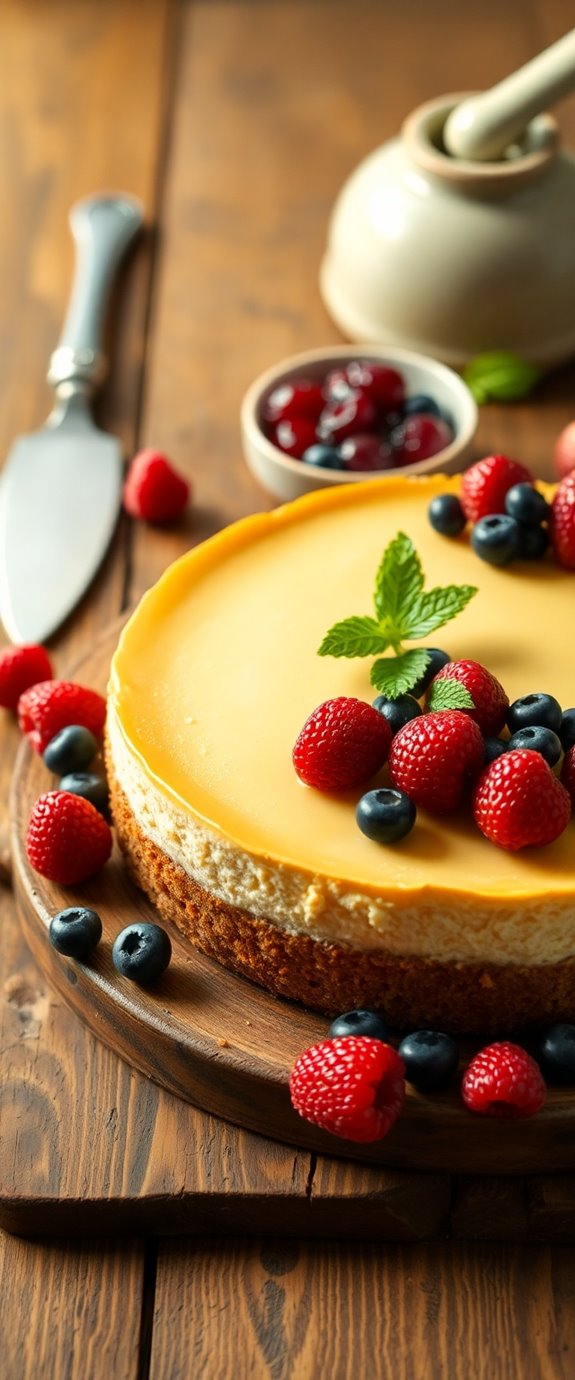
When you think about desserts, an easy baked cheesecake often comes to mind—it's rich, creamy, and incredibly satisfying. With just a few simple ingredients, you can create a treat that not only pleases the palate but also impresses guests. The process is straightforward, yet the results can feel indulgent. Curious about how to achieve that perfect balance of texture and flavor? Let's explore the steps to make this delightful cheesecake a reality.
Recipe Tips and Tricks
- Combine graham cracker crumbs and melted butter to form a crust, then press it into a springform pan before adding the filling.
- Beat softened cream cheese with sugar, then mix in eggs one at a time for a smooth cheesecake batter.
- Bake at 325°F for 60 minutes until the center is set but slightly jiggly; cool gradually in the oven.
- Refrigerate the cheesecake for at least 4 hours or overnight for optimal texture and flavor before serving.
- Customize with toppings like fresh berries or chocolate sauce for added visual appeal and taste.
How To Make It – Recipe
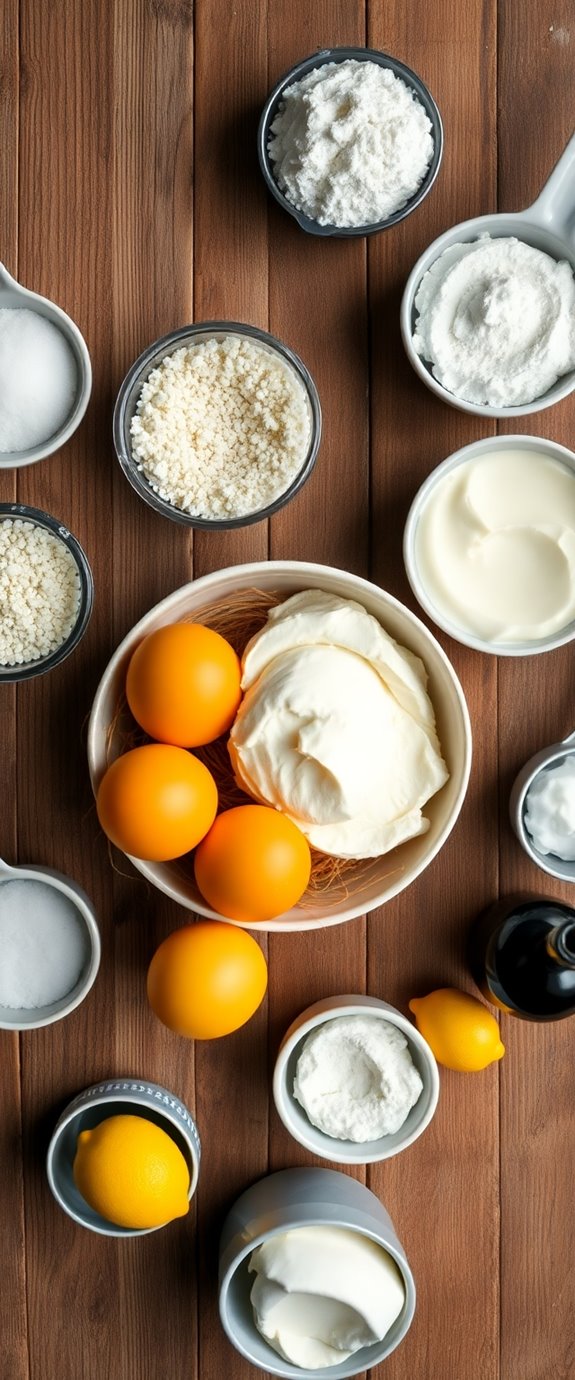
To create a delicious baked cheesecake, start by gathering your ingredients and prepping your kitchen. A baked cheesecake is rich and creamy, with a perfectly smooth texture that melts in your mouth. The process may seem a bit involved, but with the right steps and ingredients, you'll end up with a dessert that impresses family and friends alike. Be sure to allow sufficient time for the cheesecake to chill after baking, as this enhances the flavors and texture.
Begin by preheating your oven and preparing the crust, which will serve as the foundation for your cheesecake. A traditional graham cracker crust adds a delightful crunch that complements the creamy filling. The baking process is essential, as it helps the cheesecake set properly, creating that classic dense and velvety texture. Once baked, the cheesecake will need to cool properly before being refrigerated, allowing it to firm up and develop its wonderful flavor. Additionally, using an authentic New York cheesecake recipe can provide insights into techniques that elevate your baking.
Ingredients:
- 1 ½ cups graham cracker crumbs
- ½ cup unsalted butter, melted
- 1 cup granulated sugar
- 4 (8 oz) packages cream cheese, softened
- 4 large eggs
- 1 teaspoon vanilla extract
- 1 cup sour cream
- 1 tablespoon lemon juice
- Pinch of salt
In a large mixing bowl, combine the graham cracker crumbs and melted butter, then press this mixture into the bottom of a springform pan to form the crust.
In another bowl, beat the softened cream cheese and sugar until smooth. Add the eggs one at a time, mixing well after each addition. Stir in the vanilla extract, sour cream, lemon juice, and a pinch of salt until fully combined.
Pour the cheesecake filling over the prepared crust and bake in a preheated oven at 325°F (163°C) for about 60 minutes, or until the center is set but still slightly jiggly. After baking, turn off the oven and crack the door open, allowing the cheesecake to cool gradually for about an hour.
Then, refrigerate for at least 4 hours or overnight before serving.
For the best results, make sure all your ingredients are at room temperature before mixing, as this helps to achieve a smooth texture. Avoid overbeating the batter, as incorporating too much air can lead to cracks during baking.
If you notice any cracks forming, don't worry! You can easily cover them with fresh fruit or a fruit compote. Finally, consider experimenting with different flavors by adding chocolate, caramel, or fruit puree to your cheesecake batter for a unique twist. Enjoy!
Substitution Suggestions
If you're looking to customize your baked cheesecake or accommodate dietary restrictions, several ingredient substitutions can elevate your dessert without sacrificing flavor.
Swap traditional cream cheese with a dairy-free cream cheese for a vegan delight. For a tangy kick, use yogurt alternatives or replace sour cream with cashew cream.
If you're cutting down on sugar, try sugar substitutes like Stevia or erythritol.
Want a gluten-free option? Opt for gluten-free crusts made from almond flour or crushed gluten-free cookies.
Additionally, consider using dairy and nut free alternatives to ensure that everyone can enjoy a slice of your cheesecake.
With these simple changes, you can create a delicious cheesecake that fits your dietary needs while keeping it indulgent and satisfying!
Decorating Ideas
Transforming your baked cheesecake into a stunning centerpiece is easier than you might think.
Start with classic cheesecake toppings like fresh berries, drizzling vibrant raspberry or chocolate sauce over the top. For a touch of elegance, sprinkle edible gold dust or place delicate edible flowers around the edges.
Consider adding festive garnishes, such as whipped cream rosettes or a dusting of powdered sugar for a snowy effect. You can also create a layered look by adding a thin layer of fruit compote before serving. Incorporating a rich Cherries Jubilee topping can elevate your cheesecake to a whole new level of decadence.
With these simple ideas, your cheesecake won't only taste amazing but will also look irresistible!
Serving Suggestions
While you might be tempted to serve your baked cheesecake straight from the pan, presenting it on a beautiful platter can elevate the experience.
Consider using cheesecake toppings like fresh berries, a drizzle of chocolate sauce, or a sprinkle of crushed nuts for added flair. These toppings not only enhance the flavor but also make your dessert visually appealing. Additionally, a Deliciously Creamy Pumpkin Cheesecake can be a fantastic variation to try during the fall season.
For dessert pairings, serve your cheesecake alongside a scoop of vanilla ice cream or a dollop of whipped cream. A cup of coffee or a sweet dessert wine can complement the rich creaminess, creating a delightful end to any meal.
Enjoy your masterpiece!
Make-Ahead and Storage
To maximize your enjoyment of baked cheesecake, preparing it ahead of time is a smart move. You can easily make your cheesecake a day or two beforehand, allowing the flavors to meld beautifully.
If you want to extend its life, consider freezing it. Just wrap individual slices tightly in plastic wrap and place them in an airtight container.
For added excitement, try different flavor variations like chocolate, pumpkin, or berry swirls before freezing. This way, each slice remains fresh and delicious, ready to impress when you need a sweet treat on short notice. No bake cheesecake recipes can also serve as a great alternative for those who prefer a quicker preparation method.
Enjoy the convenience without sacrificing taste!
How to Store Leftovers
Storing leftovers of your baked cheesecake properly can keep it fresh and delicious for days.
Start by placing any uneaten slices in an airtight container, ensuring it's sealed tight to prevent drying out.
If you want to extend its life even further, consider freezing cheesecake. Wrap individual slices in plastic wrap, then place them in a freezer-safe container. This method preserves the creamy texture and flavor. It's worth noting that no bake gluten free cheesecake can offer a similar delightful experience when stored properly.
When you're ready to enjoy, simply thaw in the refrigerator overnight.
With proper leftover storage, you can savor your cheesecake long after baking, reliving those delightful flavors whenever you please.
Nutrition Facts(per serving)
A single slice of baked cheesecake packs a delightful combination of flavors and textures, making it a satisfying dessert option.
When you dig into this creamy treat, you'll find that the caloric content is around 300 calories per serving. This varies slightly based on your ingredient breakdown, including cream cheese, sugar, and the crust.
Each component contributes to the overall richness, with fats providing a smooth mouthfeel and sugar balancing the tanginess. Additionally, incorporating gluten free options can make this dessert accessible for those with dietary restrictions.
While it's indulgent, you can enjoy it as a special treat, savoring every bite while being mindful of those calories.
It's all about balance!
Final Thoughts
Indulging in a slice of baked cheesecake is more than just a dessert experience; it's a moment to cherish.
With the right baking tips, you can achieve that creamy texture and golden crust that makes every bite a delight.
Don't hesitate to explore dessert variations—try adding fresh fruit, chocolate swirls, or even a hint of spice for a unique twist. Additionally, consider incorporating pumpkin cheesecake as a seasonal favorite to elevate your dessert game.
Whether it's a special occasion or a simple treat, your homemade cheesecake will impress friends and family.
Recipe FAQs
Can I Use a Different Type of Cheese for This Cheesecake?
You can absolutely experiment with cream cheese alternatives like ricotta or mascarpone. Each brings unique flavor variations, adding richness or tanginess to your cheesecake. Just remember to adjust sugar levels for the best balance!
What Tools Do I Need to Make This Cheesecake?
To make this cheesecake, you'll need a mixing bowl for combining ingredients and a springform pan for baking. These tools help create a smooth batter and guarantee easy removal once your cheesecake is perfectly set.
How Long Does It Take to Bake the Cheesecake?
Baking a cheesecake is like creating a delicate symphony. You'll need to cook it at 325°F for approximately 50 to 60 minutes. Patience is essential; allow it to cool for a perfect, creamy finish.
Can I Freeze the Baked Cheesecake for Later Use?
Yes, you can freeze baked cheesecake for long-term storage. Wrap it tightly in plastic wrap and aluminum foil. Use an airtight container for the best freezing methods, ensuring it stays fresh and delicious for future enjoyment!
Is There a Gluten-Free Option for the Crust?
Imagine a garden of possibilities where gluten-free alternatives bloom. You can craft a delicious crust using almond flour or crushed gluten-free cookies. These crust variations guarantee everyone enjoys a delightful cheesecake without compromising dietary needs.


