Like a gentle whisper of nostalgia, a classic vanilla cake evokes memories of celebrations and simple joys. You'll find that this recipe balances rich flavor with a light, airy texture, making it a staple for any occasion. As you gather your ingredients and prepare to mix them, a world of creativity unfolds before you. How will you customize this timeless treat to suit your taste? The possibilities are just beginning.
Recipe Tips and Tricks
- Combine 2 cups of all-purpose flour, 1 ½ cups sugar, ½ cup softened butter, 1 cup milk, and 3 ½ teaspoons baking powder for the batter.
- Preheat the oven to 350°F (175°C) and grease two 9-inch round cake pans before pouring in the batter.
- Bake the cake for 25-30 minutes, then cool for 10 minutes in the pans before transferring to a wire rack.
- Enhance flavor by adding almond extract, fresh fruits, or spices like cinnamon to the batter.
- Decorate with buttercream frosting, fresh berries, or edible flowers for an appealing presentation.
How To Make It – Recipe
Making a delicious vanilla cake from scratch is a rewarding experience that fills your kitchen with a delightful aroma. This simple yet classic recipe yields a moist and fluffy cake that's perfect for any occasion, whether it's a birthday celebration, a family gathering, or just a treat for yourself.
The key to a great vanilla cake lies in using high-quality ingredients, especially pure vanilla extract, which enhances the flavor and aroma. Additionally, consider pairing your cake with a zesty lemon flavor to create a refreshing contrast that will delight your taste buds.
Before you begin, it's important to gather all your ingredients and tools to guarantee a smooth baking process. Prepping your ingredients ahead of time will help you follow the recipe with ease. With a few simple steps, you'll have a homemade vanilla cake that will impress your friends and family!
Ingredients:
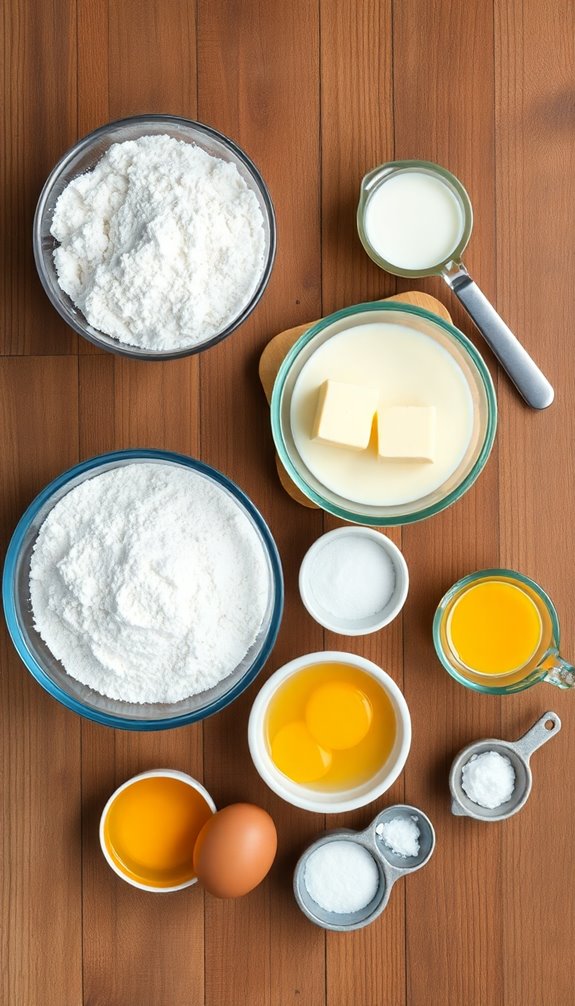
- 2 cups all-purpose flour
- 1 ½ cups granulated sugar
- ½ cup unsalted butter, softened
- 1 cup whole milk
- 3 ½ teaspoons baking powder
- 1 teaspoon salt
- 2 large eggs
- 2 teaspoons pure vanilla extract
To make the vanilla cake, preheat your oven to 350°F (175°C) and grease two 9-inch round cake pans.
In a large mixing bowl, cream together the softened butter and granulated sugar until light and fluffy. Add the eggs one at a time, beating well after each addition. Mix in the vanilla extract.
In a separate bowl, whisk together the flour, baking powder, and salt. Gradually add the dry ingredients to the wet mixture, alternating with the milk. Mix until just combined, being careful not to overmix.
Pour the batter evenly into the prepared cake pans and bake for 25-30 minutes or until a toothpick inserted in the center comes out clean. Allow the cakes to cool in the pans for 10 minutes before transferring them to a wire rack to cool completely.
For best results, make sure all your ingredients are at room temperature before you start baking. This helps to create a smooth batter and guarantees even baking.
Additionally, you can enhance the flavor by adding a bit of almond extract or lemon zest to the batter. If you want to layer your cake, consider using a simple buttercream frosting or whipped cream to complement the vanilla flavor.
Enjoy your homemade vanilla cake!
Substitution Suggestions
While you may not have all the exact ingredients on hand, there are plenty of substitutions that can still yield a delicious vanilla cake.
If you're short on eggs, consider using mashed bananas or unsweetened applesauce as egg substitutes; both add moisture and sweetness. Incorporating a deliciously simple banana cake can also enhance the flavor profile of your vanilla cake.
For dairy alternatives, almond milk or coconut milk can replace regular milk, providing a unique twist to your cake.
If you don't have butter, try using vegetable oil or even coconut oil for a rich flavor.
These simple swaps guarantee your vanilla cake remains delightful and satisfying, no matter what's in your pantry!
Decorating Ideas
To elevate your vanilla cake into a stunning centerpiece, let your creativity shine through with various decorating ideas.
Explore frosting techniques like smooth buttercream or textured whipped cream to add depth. Choose theme ideas—think beach vibes or elegant florals—to guide your color schemes.
For seasonal inspirations, incorporate edible decorations like fresh berries in summer or spice-infused toppings in fall. Layer designs can create visual interest, while topping alternatives such as chocolate shavings or crushed nuts offer delightful contrasts. Additionally, consider using almond flour in your cake for a unique texture and flavor.
Finally, focus on presentation tips: a beautiful cake stand or charming plates can enhance your masterpiece and make it truly unforgettable.
Serving Suggestions
As you prepare to share your vanilla cake, consider how the serving method can enhance the overall experience.
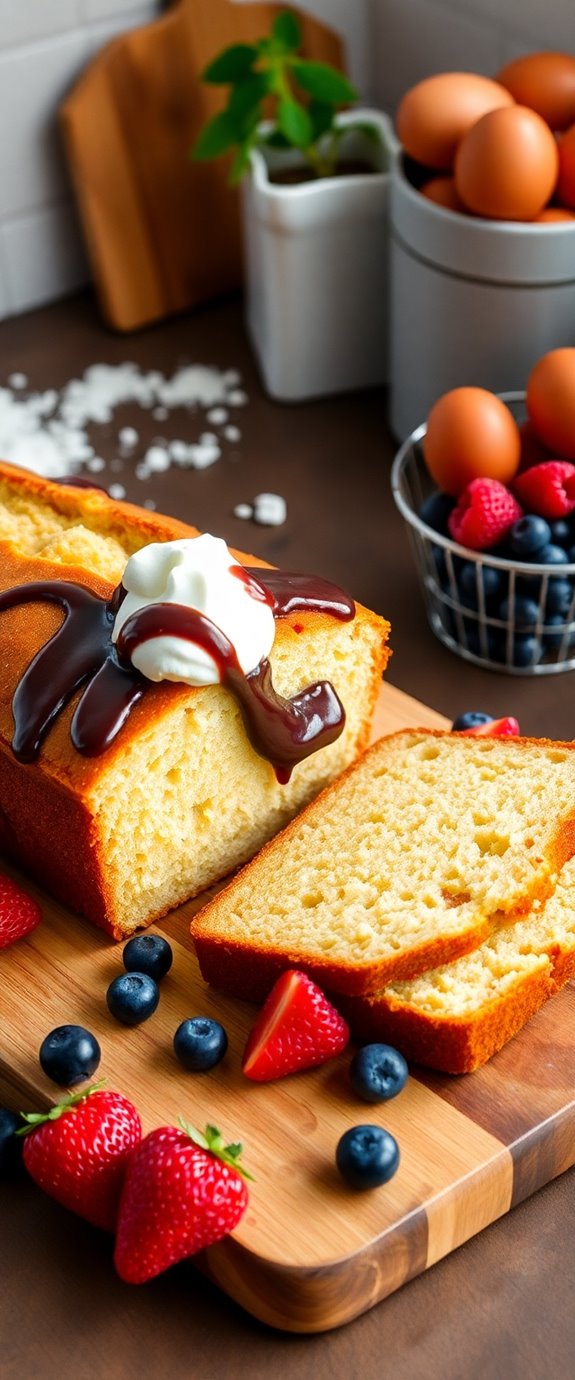
Serve generous slices, about 1-2 inches wide, to guarantee everyone enjoys a satisfying bite. Pair your cake with fresh berries or a scoop of vanilla ice cream for delightful cake pairings that elevate flavors. Drizzle a rich chocolate sauce or a tangy fruit coulis for an artistic touch. For a more elegant presentation, consider mini cake servings or cupcakes, perfect for parties. Additionally, serving the cake with a side of moist lemon cake can create a delightful contrast of flavors and textures.
Make-Ahead and Storage
If you want to enjoy your delicious vanilla cake without the last-minute rush, making it ahead of time is a smart choice.
Start by baking your cake a day or two in advance, then let it cool completely. For make-ahead tips, wrap the cake tightly in plastic wrap to lock in moisture. You can also freeze it for up to three months—just double-wrap it for best freshness. Additionally, consider making a gluten-free option for guests with dietary restrictions.
When you're ready to serve, simply thaw it in the fridge overnight.
For storage options, keep your cake in an airtight container at room temperature for up to three days, ensuring it stays delightful and fresh.
How to Store Leftovers
Once you've savored your vanilla cake, properly storing the leftovers guarantees they remain just as delicious for your next indulgence.
Start by letting the cake cool completely to maintain its moisture. Wrap individual slices tightly in plastic wrap to lock in that cake freshness. For longer storage, place the wrapped slices in an airtight container or freezer bag. If you're freezing, label the container with the date, so you remember when it was made. Additionally, you might consider adding a touch of cream cheese filling to each slice before wrapping for an extra layer of flavor.
When you're ready to enjoy, simply thaw at room temperature or in the fridge. This careful leftover storage makes certain each bite tastes as delightful as the first!
Nutrition Facts(per serving)
Each slice of vanilla cake packs a delightful combination of flavors and nutrients that can satisfy your sweet tooth while providing some essential energy.
With an average caloric content of around 300 calories per serving, it's a treat that's both indulgent and manageable.
The ingredient breakdown reveals a harmony of flour, sugar, butter, and eggs, contributing to its fluffy texture and rich taste.
You'll find carbohydrates for quick energy, fats for richness, and a hint of protein from the eggs.
Enjoying a slice can give you a sweet pick-me-up without completely derailing your dietary goals. Additionally, pairing it with cream cheese frosting can elevate the flavor profile and add a creamy texture.
Immerse yourself and savor every bite!
Final Thoughts
Enjoying a slice of vanilla cake not only satisfies your cravings but also provides a moment of joy in any gathering.
To elevate your baking experience, remember these baking tips: measure ingredients accurately, use room temperature eggs, and don't overmix the batter. Additionally, consider trying a lemon cake recipe that complements the flavors of vanilla for a refreshing twist.
For a creative twist, explore flavor variations like adding almond extract, incorporating fresh fruits, or swirling in chocolate ganache. Each bite can transport you to a new domain of taste, making your vanilla cake a delightful centerpiece.
Recipe FAQs
Can I Use Cake Flour Instead of All-Purpose Flour?
Yes, you can use cake flour instead of all-purpose flour. It'll create a lighter, softer cake texture. Just remember, flour substitutes can alter the final product, so adjust your measurements accordingly for best results.
How Do I Know When the Cake Is Fully Cooked?
When it comes to knowing your cake's done, trust your instincts. Use cake testing with a toothpick; if it comes out clean, you're golden. Look for a golden crust and a springy touch as doneness indicators.
What Type of Vanilla Should I Use for the Best Flavor?
For the best flavor, you'll love Madagascar vanilla for its rich, creamy notes. If you crave something floral and fruity, consider Tahitian vanilla. Mixing both can create a unique, complex flavor profile you won't forget.
Can I Use a Different Sweetener in the Recipe?
Imagine a cake's golden crust embracing a sweet surprise inside. You can absolutely swap in sweetener alternatives, but remember, each one brings a unique taste comparison, transforming your creation into something delightfully unexpected. Experiment and enjoy!
How Can I Make the Cake Gluten-Free?
To make the cake gluten-free, you can use gluten substitutes like almond flour or coconut flour. Incorporate baking tips such as increasing liquid and adding xanthan gum for better texture and structure. Enjoy your delicious creation!