Last reviewed: May 2026
Green kitchen cabinets offer a versatile and stylish way to refresh your home, bringing a sense of nature and tranquility indoors. I’ve seen firsthand how this color choice can transform a kitchen from ordinary to extraordinary, providing a unique blend of sophistication and warmth. It’s a design decision that truly makes a statement.
Choosing green for your cabinetry allows for incredible design flexibility, ranging from the subtle elegance of sage green kitchen cabinets to the dramatic depth of dark green kitchen cabinets. This spectrum ensures there’s a shade to complement any aesthetic, whether you’re aiming for a farmhouse feel or a modern minimalist look. I often advise clients to consider the natural light in their space when exploring different green kitchen cabinets ideas.
Light green kitchen cabinets can brighten a smaller room, making it feel more expansive and airy. Conversely, rich hues like emerald green kitchen cabinets create a luxurious, jewel-box effect, perfect for a more intimate setting. I find that green acts as a neutral in many ways, pairing beautifully with various materials and finishes.
This adaptability is why green kitchen cabinets continue to grow in popularity among homeowners and designers alike.
Why Green Kitchen Cabinets Are Changing Modern Kitchens
Green kitchen cabinets are redefining modern kitchens by introducing a calming, nature-inspired aesthetic that moves beyond traditional neutrals. I’ve observed a significant shift in design preferences, with homeowners increasingly seeking spaces that feel both contemporary and connected to the outdoors. This trend reflects a broader desire for biophilic design elements within the home.
The versatility of green allows for a wide range of expressions, from the understated elegance of sage green kitchen cabinets to the bold statement of dark green kitchen cabinets. This adaptability means green can anchor diverse design schemes, from minimalist to maximalist. I often recommend exploring various green kitchen cabinets ideas to find the perfect shade that complements existing architectural features and personal style.
For instance, light green kitchen cabinets can create an airy, expansive feel, particularly in smaller urban kitchens. Conversely, rich tones like emerald green kitchen cabinets offer a luxurious depth, transforming a kitchen into a sophisticated focal point. This spectrum of greens provides designers and homeowners with unparalleled flexibility to personalize their spaces.
The Spectrum of Green: Finding Your Perfect Shade
Choosing the right green for your kitchen cabinets involves understanding the nuances of different shades and how they interact with your space. I always encourage clients to consider the mood they want to evoke, as each hue carries its own distinct personality. For instance, sage green kitchen cabinets offer a muted, earthy feel, perfect for a serene and understated aesthetic.
Dark green kitchen cabinets, such as a deep forest or hunter green, provide a sense of sophistication and drama. These richer tones work exceptionally well in larger kitchens or those with ample natural light, preventing the space from feeling too enclosed. I’ve found that they pair beautifully with brass hardware and natural wood accents, creating a luxurious yet grounded environment.
Light green kitchen cabinets, on the other hand, can make a smaller kitchen feel more expansive and airy. Shades like mint or celadon reflect light, brightening the room and creating a fresh, inviting atmosphere. These lighter greens are particularly effective in modern or Scandinavian-inspired designs.
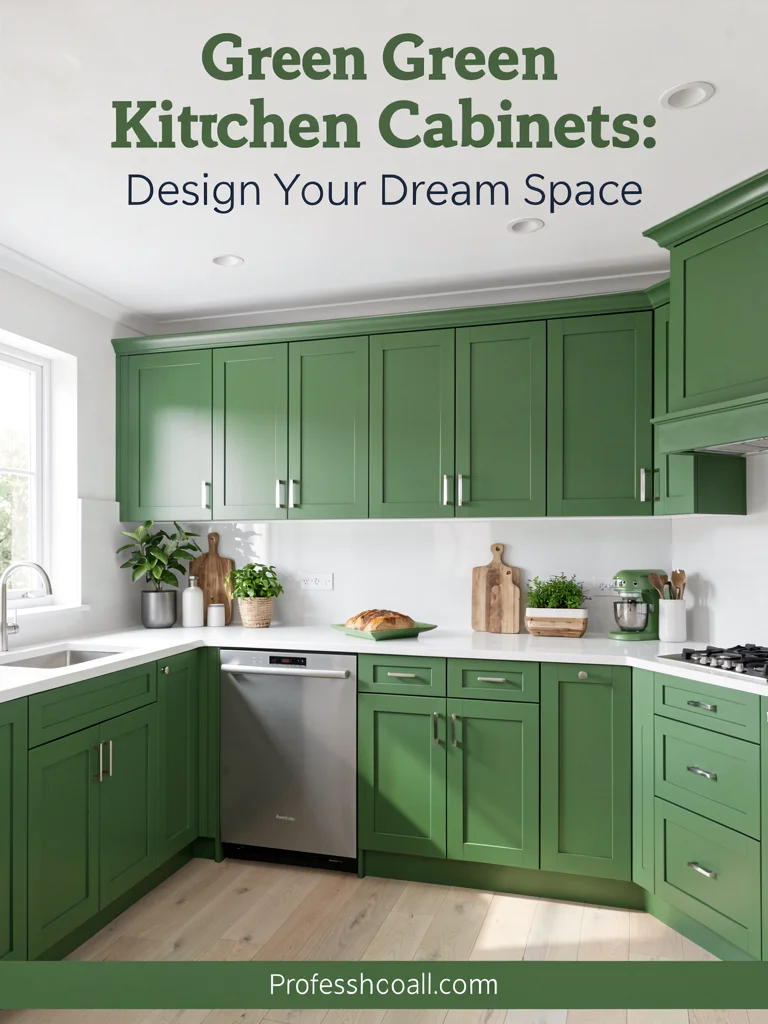
When exploring green kitchen cabinets ideas, consider these popular options:
Olive Green: This warm, muted green has yellow undertones, lending itself well to rustic or Mediterranean-inspired kitchens. It offers a sophisticated alternative to more vibrant greens.
Emerald Green: A jewel-toned green that exudes luxury and depth, often used to create a focal point or add a touch of opulence. Emerald green kitchen cabinets make a bold statement.
Pistachio Green: A soft, pastel green that brings a playful and cheerful energy to the kitchen, ideal for a retro or cottage-core aesthetic.
Perfect Pairings: What to Match with Green Cabinets
To truly elevate green kitchen cabinets, I focus on complementary materials and colors that enhance their natural beauty. The goal is to create a cohesive and inviting space, whether you’ve chosen the subtle charm of sage green kitchen cabinets or the dramatic flair of dark green kitchen cabinets. I often advise clients to think about how different textures and finishes can play off the green, adding depth and character.
For instance, pairing green with natural wood tones creates an organic, grounded feel. Light woods like maple or birch can brighten the space, while darker woods such as walnut or mahogany add a touch of sophistication. This combination is a cornerstone of many successful green kitchen cabinets ideas.
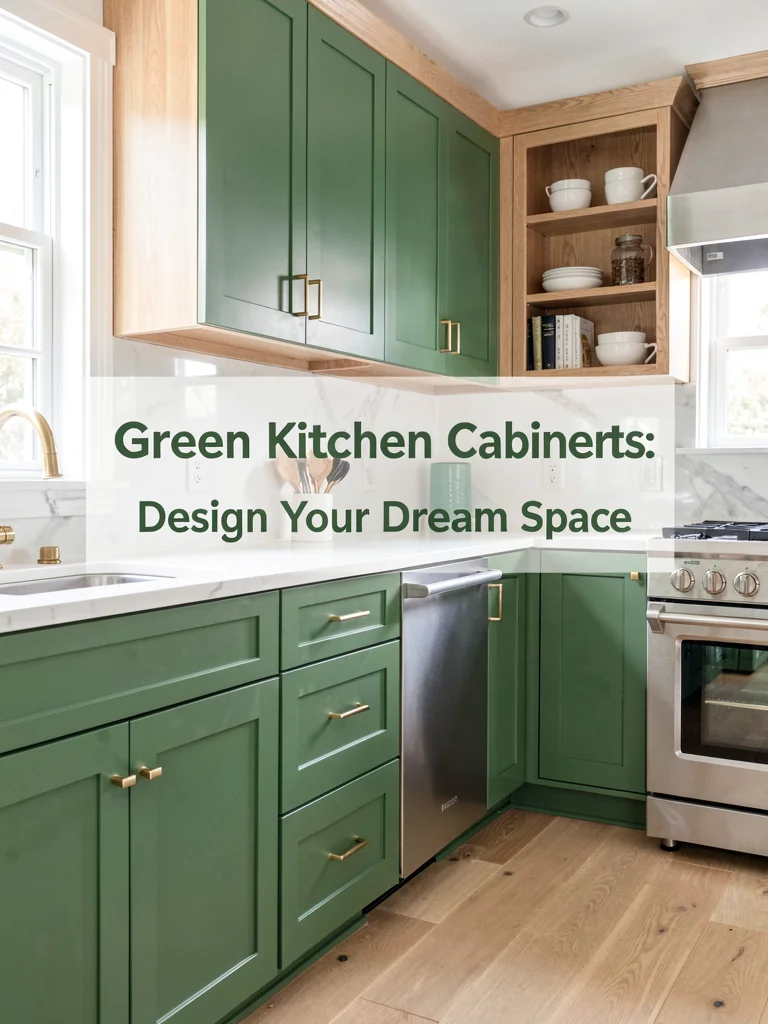
Consider these pairings to bring out the best in your green cabinetry:
Warm Metals: Brass, copper, and gold hardware provide a luxurious contrast, especially with emerald green kitchen cabinets. Their warm undertones beautifully complement the cool tones of green.
White or Cream Countertops: These lighter surfaces offer a crisp, clean backdrop that allows the green to truly pop. They prevent the space from feeling too dark, particularly with deeper green shades.
Terracotta or Clay Tiles: For a rustic or Mediterranean vibe, these earthy tones introduce warmth and texture. They create a beautiful, natural harmony with most green hues.
Practical Considerations for Your Green Kitchen
When designing with green kitchen cabinets, I always emphasize the importance of considering both the practicalities of daily use and the long-term maintenance. For instance, while dark green kitchen cabinets like emerald green offer a dramatic aesthetic, they can show fingerprints and smudges more readily than lighter shades. This is a common observation in my projects, particularly in high-traffic family kitchens.
I advise clients to think about the finish as much as the color itself. A matte finish, while trendy, can be more challenging to clean than a semi-gloss or satin finish, especially for spills or grease splatters. This is particularly true for sage green kitchen cabinets, where a matte finish can absorb light and make the color appear duller if not meticulously maintained.
Durability of Materials: Beyond color, the cabinet material itself dictates longevity. I often recommend plywood or solid wood construction over particle board for cabinet boxes, as they offer superior resistance to moisture and wear, crucial in a kitchen environment.
Lighting Integration: Effective lighting is paramount, especially with deeper green hues. I ensure a layered lighting scheme, combining ambient, task, and accent lighting to prevent shadows and highlight the cabinetry’s true color, making green kitchen cabinets truly shine.
Ventilation Needs: Proper ventilation is critical to protect your investment. A powerful range hood not only removes cooking odors but also prevents grease and moisture buildup that can degrade cabinet finishes over time, preserving the vibrancy of your chosen green.
Frequently Asked Questions About Green Kitchens
Many clients ask me about the versatility of green kitchen cabinets. I always tell them that green is surprisingly adaptable, working well with a wide range of design styles from rustic farmhouse to sleek modern. For instance, sage green kitchen cabinets lend themselves beautifully to a more traditional or country aesthetic, while a deep emerald green can create a luxurious, contemporary feel.
Another common question revolves around maintenance. Generally, green cabinets are no more difficult to maintain than any other color, but the finish plays a significant role. I find that a satin or semi-gloss finish on dark green kitchen cabinets is often the easiest to wipe clean, resisting smudges better than a matte option.
Regular cleaning with a mild soap and water solution is usually sufficient to keep them looking fresh.
People often wonder about the best colors to pair with green kitchen cabinets. While many combinations work, I frequently recommend incorporating natural elements to enhance green’s organic feel. Consider these complementary pairings:
Blonde Wood Floors: Light-colored wood flooring, such as white oak or ash, provides a bright, airy foundation that contrasts beautifully with both light and dark green cabinetry.
Matte Black Hardware: This creates a sophisticated, modern edge, especially striking against lighter greens like pistachio or mint.
Subtle Patterned Backsplashes: A backsplash with a delicate geometric or botanical pattern in neutral tones can add visual interest without overwhelming the green.
Conclusion
Ultimately, green kitchen cabinets offer a unique opportunity to infuse your home with both personality and timeless elegance. I encourage you to gather swatches and samples, experimenting with different shades and finishes in your own lighting conditions. Embracing green allows you to create a truly distinctive and inviting culinary space that will inspire for years to come.